
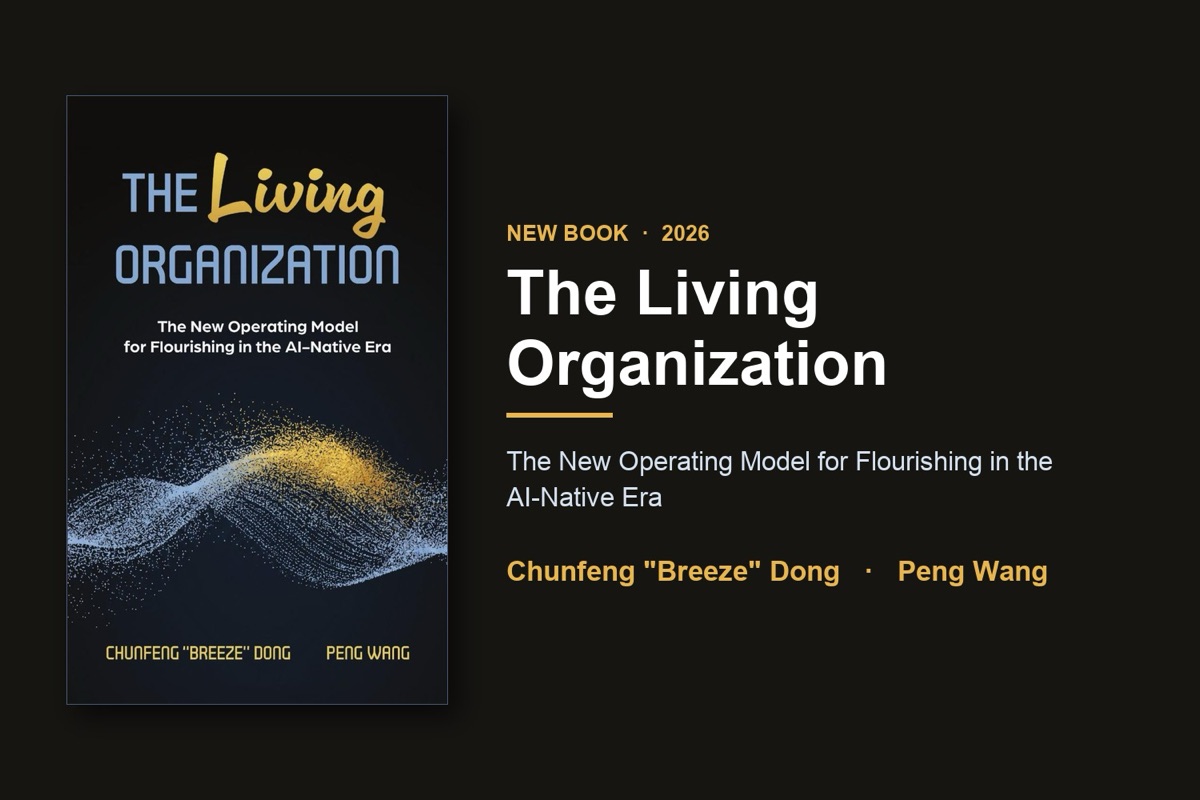
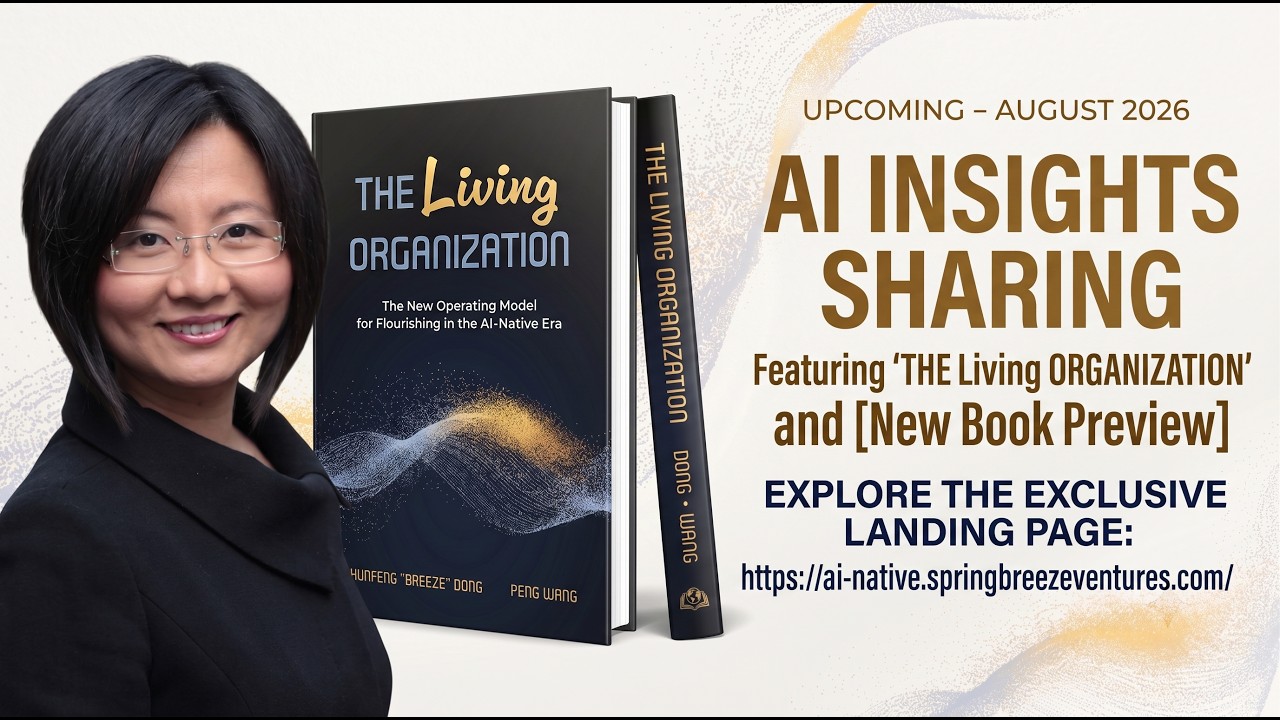
The Living Organization is out now
A new operating model for organizations where people and AI both flourish.

The Future Is Here, What’s Beyond AI Agents
A 58-minute conversation with Meng LI, on what humans live on once the execution is handled.
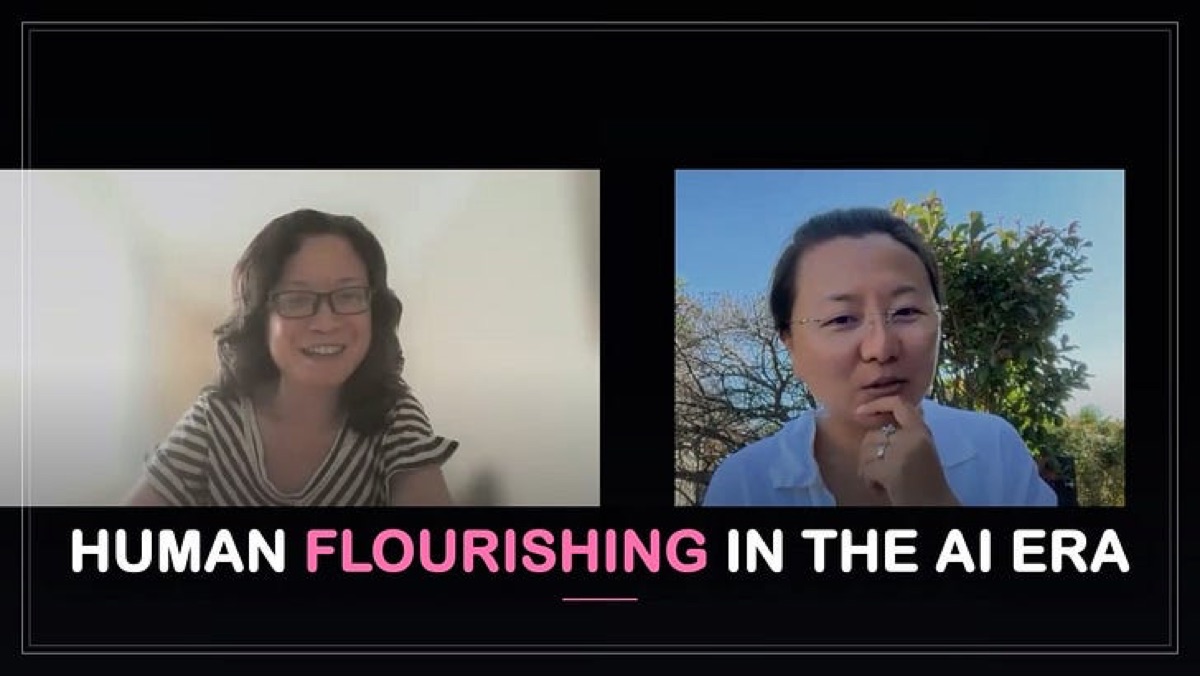
Human Flourishing in the AI Era
A full conversation with Meng LI — what flourishing actually means once AI absorbs more and more of the execution.
What a paid subscription includes
Two audiobook collections, a quarterly Q&A, and support for the free field notes.
Start here: Redesigning work with AI
Field notes on organizations, coaching, and staying deeply human.
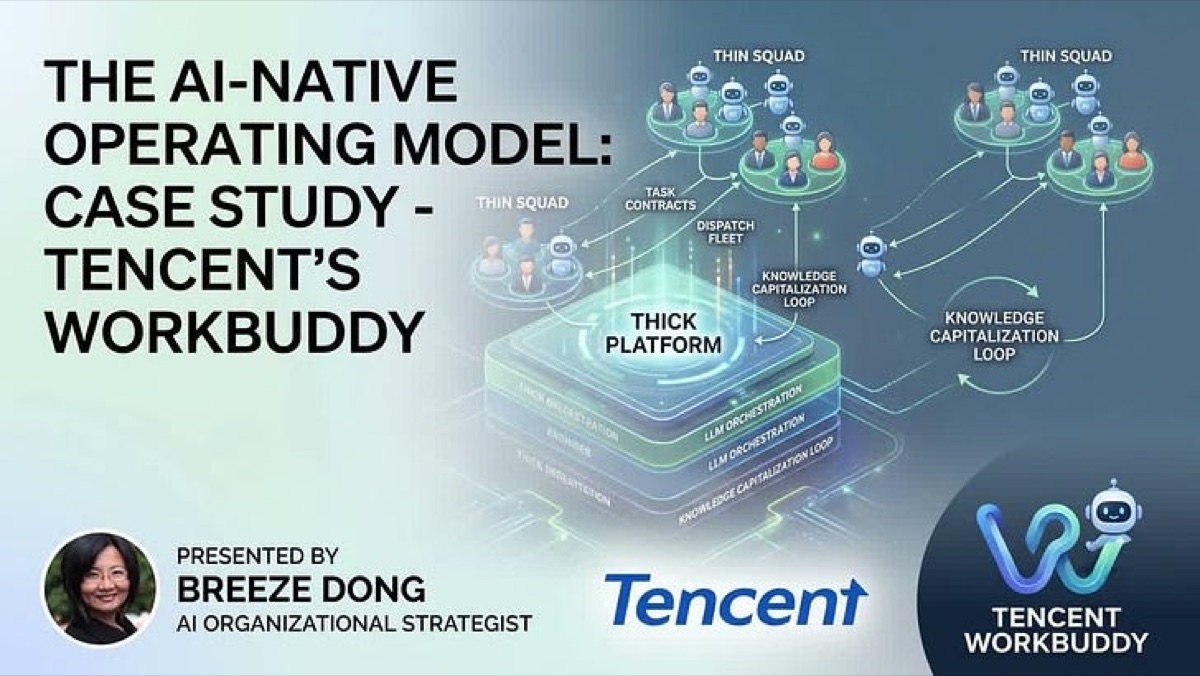
The AI-Native Operating Model: What Tencent’s 10-Person WorkBuddy Team Actually Redesigned
Tencent’s WorkBuddy team went from 10 people to 100 in under a year and got faster, not slower. What they actually redesigned was the operating model — decision distance, proximity to the real problem, and moving human judgment upstream into defining what “done” means.
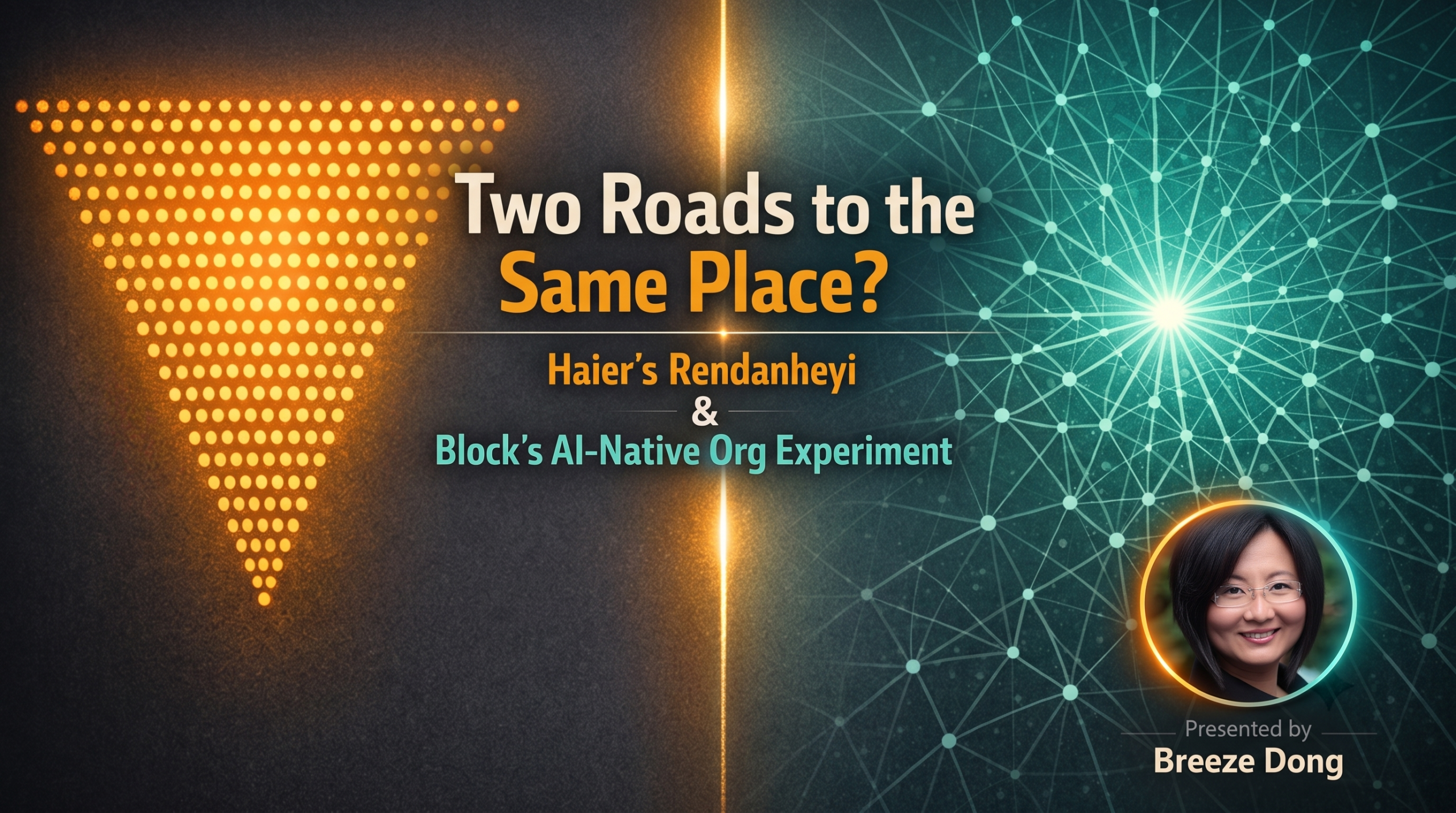
Two Roads to the Same Place? Haier’s Rendanheyi and Block’s AI-Native Org Experiment
Haier spent twenty years dismantling its own hierarchy. Block is betting AI can replace the coordination layer entirely. Opposite starting points, converging on the same question: what is middle management actually for once AI moves information through an organization?

How a Pharma Giant Actually Implemented AI: The 3-Stage Path
A major pharmaceutical company implemented AI by digitizing first and adding intelligence second — and that order is the whole lesson. For most traditional enterprises, AI transformation is really the unfinished digitalization programme, arriving with a new name.
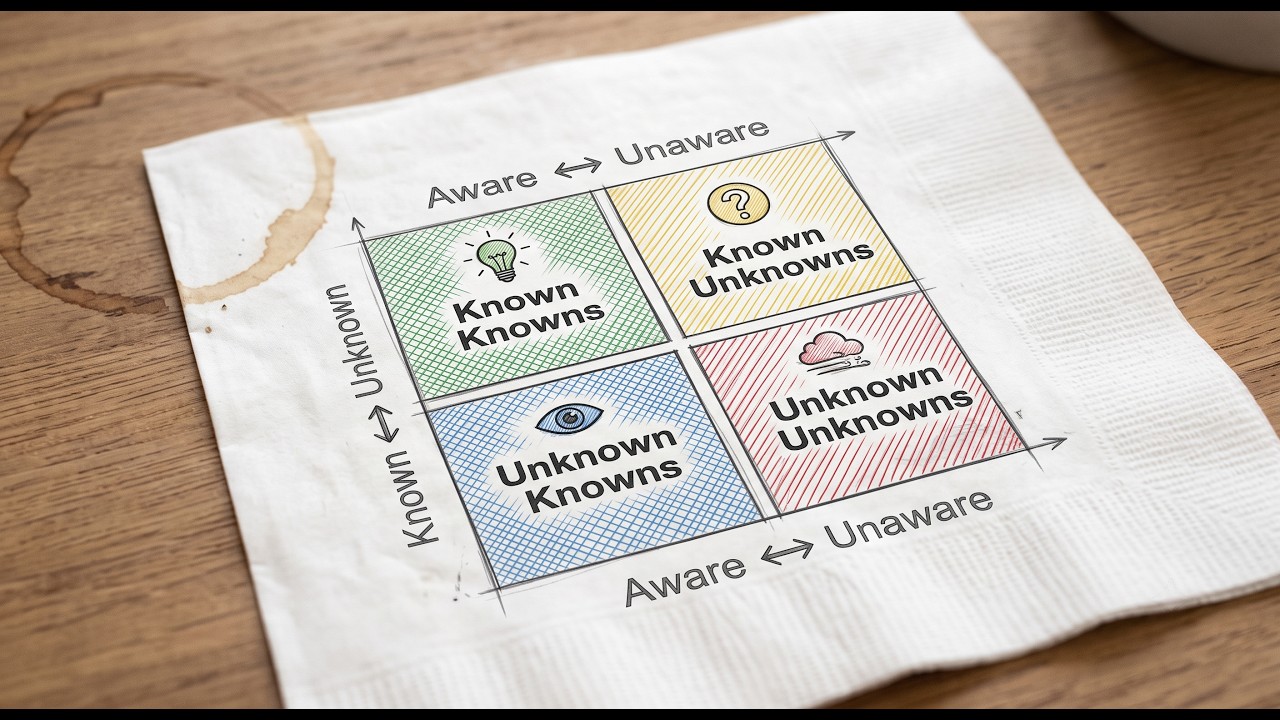
Your AI Isn’t Failing — Your Specification Is
As models run autonomous tasks for 30, 60, 90 minutes, output quality stops being limited by machine capability and starts being limited by human specification. The Rumsfeld matrix applied to human–AI collaboration, plus four techniques that surface what you didn’t know you assumed.

Why Hierarchy Existed — and Why AI Just Removed the Reason
Hierarchy was never mainly about power — it was a rational answer to information scarcity. AI just removed the scarcity. Which means self-management stops being idealism and becomes the economically rational design.

Stop Measuring Tomorrow’s Talent With Yesterday’s Rulers: Performance Management in the AI-Native Era
We have integrated extraordinary AI tools into our workflows while still measuring human value with performance systems built for a different era. Traditional models reward predictable execution and zero mistakes. AI-native talent runs ten bold experiments and fails eight times.
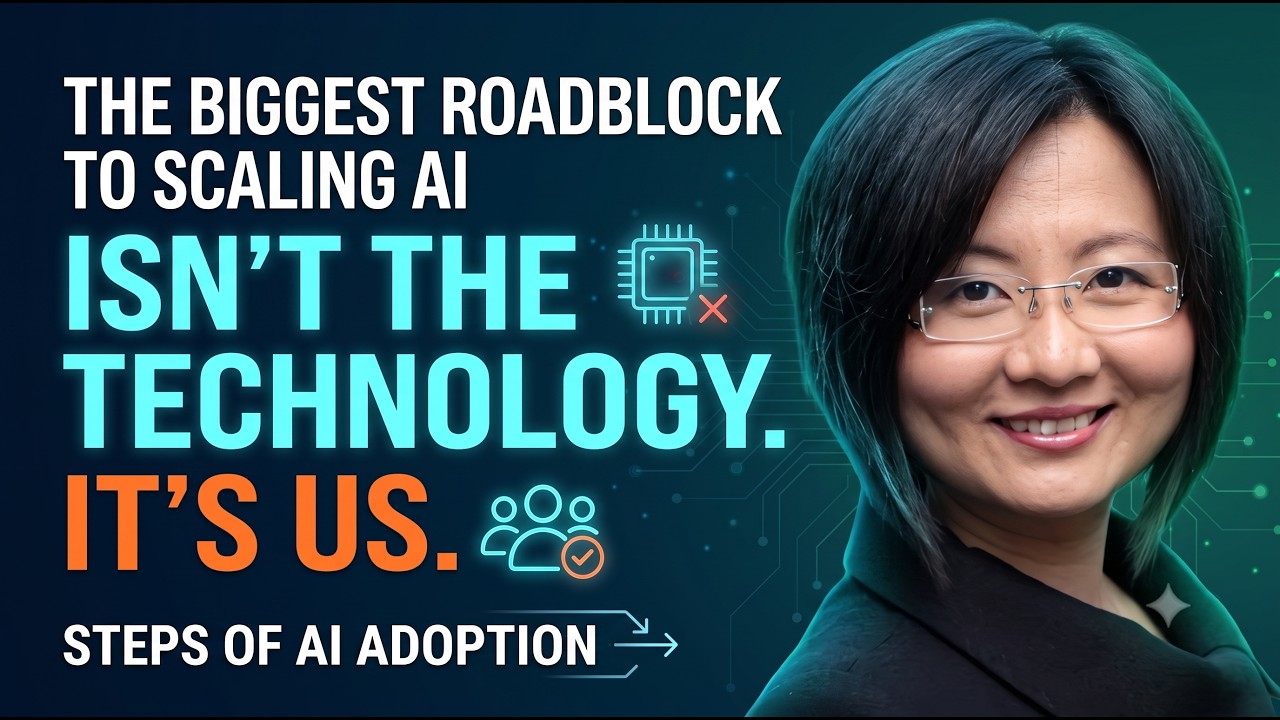
The Five Steps of AI Adoption: From Gated to AI-Native
Five levels of how organisations actually scale AI agents, from zero to a thousand-plus. At every step your role shifts — and so does the bottleneck: from your attention, to your review capacity, to trust itself.
How Much Does a CEO Really Need to Understand About AI?
A CEO does not need to understand the technology — but they do need a tangible feel for what AI agents can actually deliver, or they cannot tell a real 20% efficiency gain from a well-packaged demo. Three things that cannot be delegated.
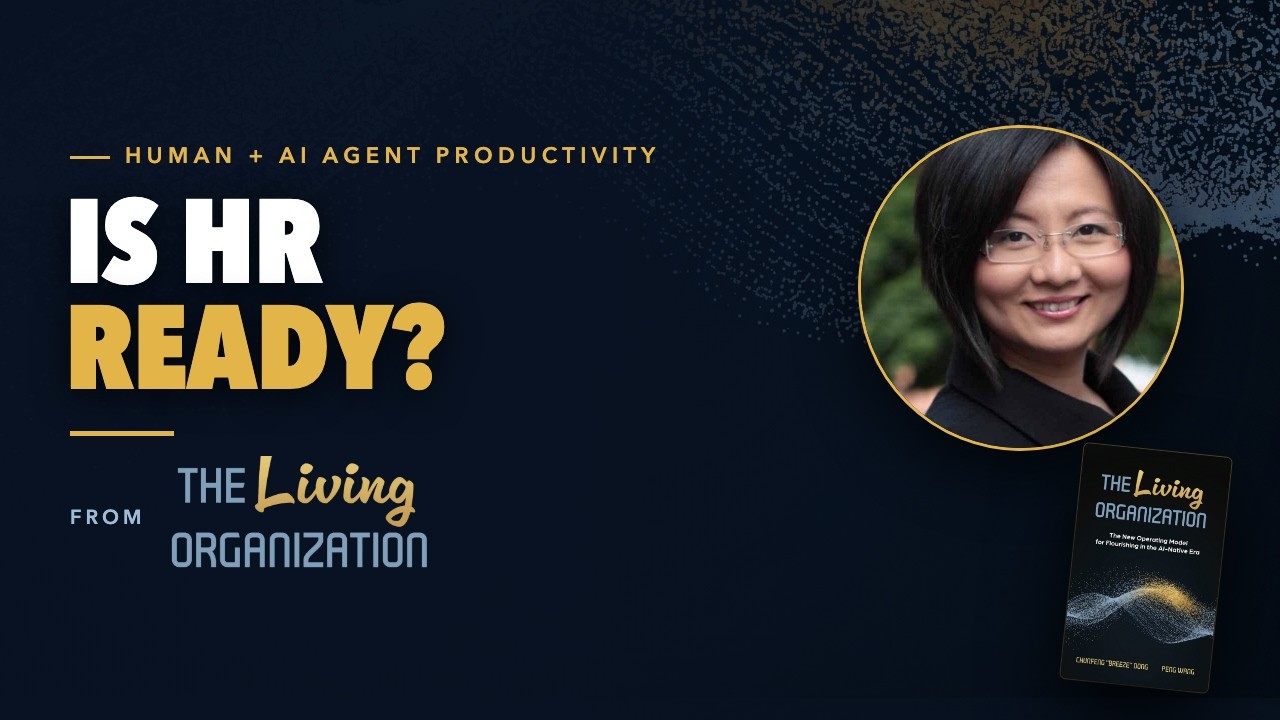
Is HR Ready to Design Human and AI Agent Productivity Together?
When agents do real work, headcount stops being the unit of capacity — and job architecture, performance management and workforce planning all rest on an assumption that no longer holds. One manufacturer’s answer: split HR into Human Service and a Human AI Resource Office.

The Living Organization: Five Pillars of an AI-Native Operating Model
An operating model for enterprises that need to absorb AI without breaking the people inside them. Five pillars — Distributed Authority, Fluid Structure, Evolutionary Purpose, Human Wholeness and Human–Agent Governance — and the three methods that make them practical.
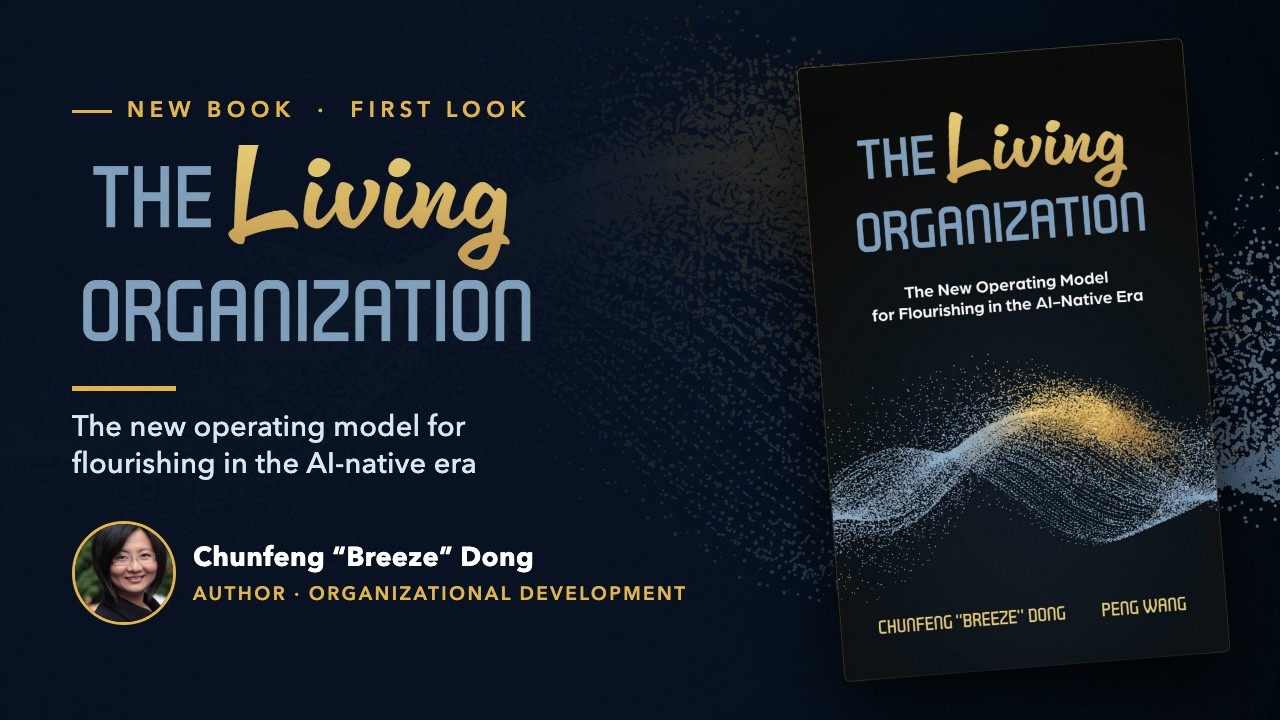
$2M Revenue Per Employee: The Case for the Living Organization
Moonshot AI (Kimi) has about 300 people. By what it told its investors, its annual recurring revenue passed $1 billion in August 2026 — roughly $3 million per person. Midjourney: 11 people, $300 million. AI-native firms run at roughly $2M+ revenue per employee against about $250K in traditional software. That gap is not effort. It is structural.
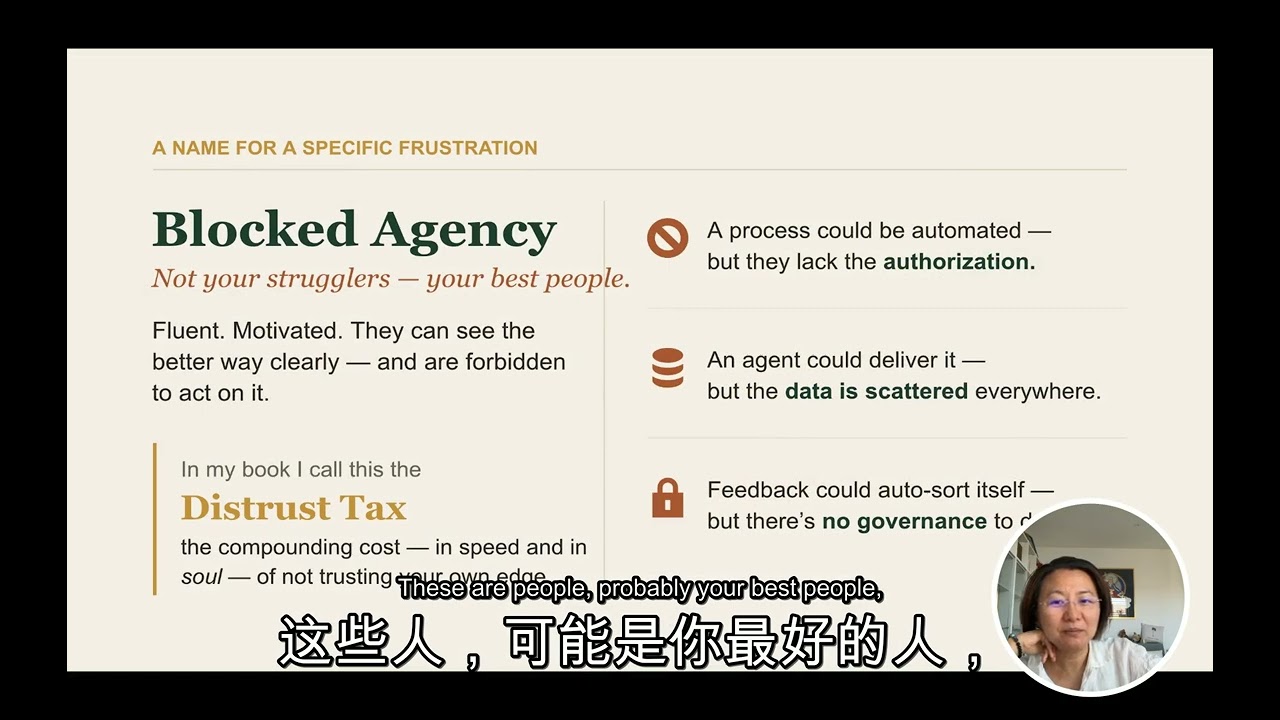
67% of AI Adoption Blockers Are Organizational, Not Individual
Microsoft’s 2026 Work Trend Index found that 67% of AI adoption barriers are organizational, not individual. If your AI rollout has stalled, the constraint is almost certainly your approval layers, data access and incentives — not your people’s skills.
The audiobooks are yours now — here’s how to listen
Both books, all thirty-four parts, included with your subscription
A Soulful Transition · A Personal Welcome from Breeze
Part 1 of 19 · the audiobook of A Soulful Transition. Start here.

A Soulful Transition · Foreword
Part 2 of 19 · the audiobook of A Soulful Transition.
The Living Organization is out now
A new operating model for organizations where people and AI both flourish.
The Future Is Here, What’s Beyond AI Agents
A 58-minute conversation with Meng LI, on what humans live on once the execution is handled.
Human Flourishing in the AI Era
A full conversation with Meng LI — what flourishing actually means once AI absorbs more and more of the execution.
What a paid subscription includes
Two audiobook collections, a quarterly Q&A, and support for the free field notes.
Start here: Redesigning work with AI
Field notes on organizations, coaching, and staying deeply human.
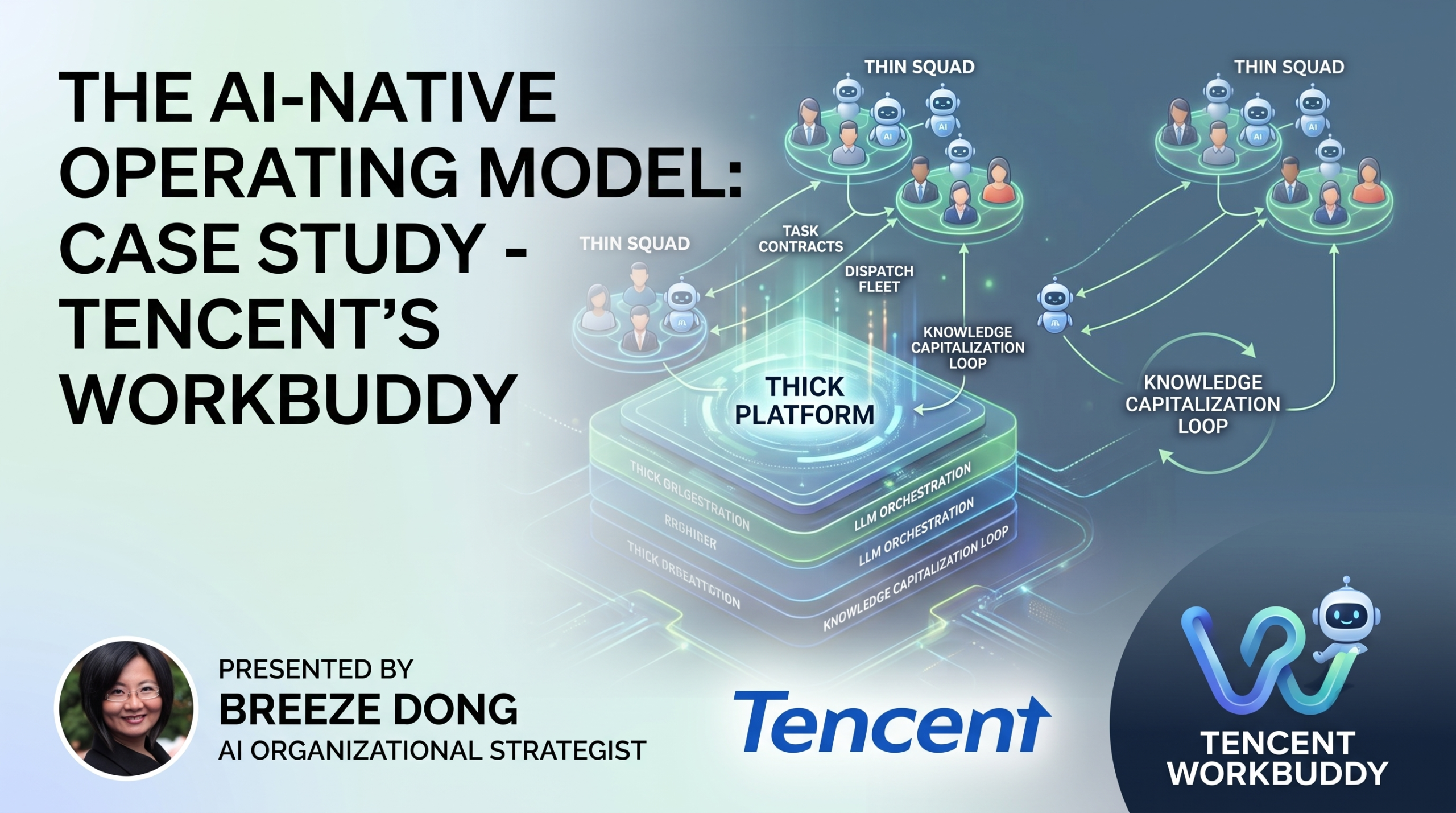
The AI-Native Operating Model: What Tencent’s 10-Person WorkBuddy Team Actually Redesigned
Tencent’s WorkBuddy team went from 10 people to 100 in under a year and got faster, not slower. What they actually redesigned was the operating model — decision distance, proximity to the real problem, and moving human judgment upstream into defining what “done” means.
Two Roads to the Same Place? Haier’s Rendanheyi and Block’s AI-Native Org Experiment
Haier spent twenty years dismantling its own hierarchy. Block is betting AI can replace the coordination layer entirely. Opposite starting points, converging on the same question: what is middle management actually for once AI moves information through an organization?
How a Pharma Giant Actually Implemented AI: The 3-Stage Path
A major pharmaceutical company implemented AI by digitizing first and adding intelligence second — and that order is the whole lesson. For most traditional enterprises, AI transformation is really the unfinished digitalization programme, arriving with a new name.
Your AI Isn’t Failing — Your Specification Is
As models run autonomous tasks for 30, 60, 90 minutes, output quality stops being limited by machine capability and starts being limited by human specification. The Rumsfeld matrix applied to human–AI collaboration, plus four techniques that surface what you didn’t know you assumed.
Why Hierarchy Existed — and Why AI Just Removed the Reason
Hierarchy was never mainly about power — it was a rational answer to information scarcity. AI just removed the scarcity. Which means self-management stops being idealism and becomes the economically rational design.
Stop Measuring Tomorrow’s Talent With Yesterday’s Rulers: Performance Management in the AI-Native Era
We have integrated extraordinary AI tools into our workflows while still measuring human value with performance systems built for a different era. Traditional models reward predictable execution and zero mistakes. AI-native talent runs ten bold experiments and fails eight times.
The Five Steps of AI Adoption: From Gated to AI-Native
Five levels of how organisations actually scale AI agents, from zero to a thousand-plus. At every step your role shifts — and so does the bottleneck: from your attention, to your review capacity, to trust itself.
How Much Does a CEO Really Need to Understand About AI?
A CEO does not need to understand the technology — but they do need a tangible feel for what AI agents can actually deliver, or they cannot tell a real 20% efficiency gain from a well-packaged demo. Three things that cannot be delegated.
Is HR Ready to Design Human and AI Agent Productivity Together?
When agents do real work, headcount stops being the unit of capacity — and job architecture, performance management and workforce planning all rest on an assumption that no longer holds. One manufacturer’s answer: split HR into Human Service and a Human AI Resource Office.
The Living Organization: Five Pillars of an AI-Native Operating Model
An operating model for enterprises that need to absorb AI without breaking the people inside them. Five pillars — Distributed Authority, Fluid Structure, Evolutionary Purpose, Human Wholeness and Human–Agent Governance — and the three methods that make them practical.
$2M Revenue Per Employee: The Case for the Living Organization
Moonshot AI (Kimi) has about 300 people. By what it told its investors, its annual recurring revenue passed $1 billion in August 2026 — roughly $3 million per person. Midjourney: 11 people, $300 million. AI-native firms run at roughly $2M+ revenue per employee against about $250K in traditional software. That gap is not effort. It is structural.
67% of AI Adoption Blockers Are Organizational, Not Individual
Microsoft’s 2026 Work Trend Index found that 67% of AI adoption barriers are organizational, not individual. If your AI rollout has stalled, the constraint is almost certainly your approval layers, data access and incentives — not your people’s skills.
The audiobooks are yours now — here’s how to listen
Both books, all thirty-four parts, included with your subscription
A Soulful Transition · A Personal Welcome from Breeze
Part 1 of 19 · the audiobook of A Soulful Transition. Start here.
A Soulful Transition · Foreword
Part 2 of 19 · the audiobook of A Soulful Transition.